________ Refers to the Power of an Appellate Court to Review the Decisions of a Lower Court
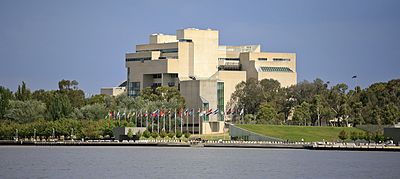

An appellate court, commonly called a court of appeal(s),[i] appeal courtroom, court of second case or second instance court, is any courtroom of police force that is empowered to hear an appeal of a trial court or other lower tribunal. In much of the world, court systems are divided into at least three levels: the trial courtroom, which initially hears cases and reviews evidence and testimony to determine the facts of the example; at to the lowest degree 1 intermediate appellate courtroom; and a supreme court (or court of last resort) which primarily reviews the decisions of the intermediate courts, often on a discretionary basis. A particular court system's supreme court is its highest appellate court.[two] Appellate courts nationwide can operate under varying rules.[3]
Under its standard of review, an appellate court decides the extent of the deference it would give to the lower courtroom's decision, based on whether the appeal were one of fact or of constabulary. In reviewing an issue of fact, an appellate court normally gives deference to the trial court's findings. It is the duty of trial judges or juries to observe facts, view the evidence immediate, and observe witness testimony. When reviewing lower decisions on an issue of fact, courts of appeal generally expect for articulate error . The appellate court reviews issues of law de novo (anew, no deference) and may reverse or modify the lower courtroom'southward determination if the appellate court believes the lower courtroom misapplied the facts or the law. An appellate court may as well review the lower estimate's discretionary decisions, such as whether the gauge properly granted a new trial or disallowed show. The lower court'southward decision is only changed in cases of an "abuse of discretion". This standard tends to be even more deferential than the "clear error" standard.
Before hearing any case, the Court must have jurisdiction to consider the appeal. The dominance of appellate courts to review the decisions of lower courts varies widely from ane jurisdiction to another. In some areas, the appellate courtroom has express powers of review. Mostly, an appellate court's judgment provides the final directive of the appeals courts as to the affair appealed, setting out with specificity the court's determination that the activity appealed from should be affirmed, reversed, remanded or modified.[4] Depending on the type of case and the decision below, appellate review primarily consists of: an entirely new hearing (a non trial de novo); a hearing where the appellate court gives deference to factual findings of the lower court; or review of detail legal rulings made by the lower courtroom (an entreatment on the record).
Bifurcation of civil and criminal appeals [edit]
While many appellate courts have jurisdiction over all cases decided past lower courts, some systems have appellate courts divided by the blazon of jurisdiction they exercise. Some jurisdictions have specialized appellate courts, such as the Texas Court of Criminal Appeals, which only hears appeals raised in criminal cases, and the U.Due south. Court of Appeals for the Federal Circuit, which has general jurisdiction only derives nearly of its caseload from patent cases, on one hand, and appeals from the Court of Federal Claims on the other. In the United States, Alabama, Tennessee, and Oklahoma also accept dissever courts of criminal appeals. Texas and Oklahoma have the final decision of criminal cases vested in their respective courts of criminal appeals,[5] while Alabama and Tennessee allow decisions of its court of criminal appeals to be finally appealed to the state supreme court.[6] [7]
Courts of criminal appeals [edit]
- Civilian
- Court of Criminal Entreatment (England and Wales), abolished 1966
- Court of Criminal Appeal (Ireland), abolished 2014
- U.South. States:
- Alabama Court of Criminal Appeals
- Oklahoma Court of Criminal Appeals
- Tennessee Court of Criminal Appeals
- Texas Court of Criminal Appeals
- Military
- United States Army Court of Criminal Appeals
- Navy-Marine Corps Court of Criminal Appeals (Us)
- Coast Guard Court of Criminal Appeals (United states of america)
- Air Force Court of Criminal Appeals (United States)
Courts of civil appeals [edit]
- Alabama Courtroom of Civil Appeals
- Oklahoma Court of Ceremonious Appeals
Appellate courts past country [edit]
New Zealand [edit]
The Court of Entreatment of New Zealand, located in Wellington, is New Zealand's principal intermediate appellate court.[8] In do, most appeals are resolved at this intermediate appellate level, rather than in the Supreme Court.[9]
Philippines [edit]
The Courtroom of Appeals of the Philippines is the primary intermediate appellate court of that land. The Courtroom of Appeals is primarily found in Manila, with three divisions each in Cebu Metropolis and Cagayan de Oro. Other appellate courts include the Sandiganbayan for cases involving graft and abuse, and the Court of Revenue enhancement Appeals for cases involving revenue enhancement. Appeals from all iii appellate courts are to the Supreme Court.
Sri Lanka [edit]
The Courtroom of Appeal of Sri Lanka, located in Colombo, is the second senior court in the Sri Lankan legal system.
U.k. [edit]
The states [edit]
In the United States, both state and federal appellate courts are normally restricted to examining whether the lower court fabricated the correct legal determinations, rather than hearing direct evidence and determining what the facts of the case were.[ten] Furthermore, U.S. appellate courts are usually restricted to hearing appeals based on matters that were originally brought up before the trial court. Hence, such an appellate court will non consider an appellant's argument if it is based on a theory that is raised for the first time in the appeal.[xi]
In most U.S. states, and in U.South. federal courts, parties earlier the court are allowed 1 appeal as of right. This means that a party who is unsatisfied with the consequence of a trial may bring an entreatment to contest that outcome. Notwithstanding, appeals may be costly, and the appellate courtroom must find an error on the part of the courtroom below that justifies upsetting the verdict. Therefore, only a small proportion of trial court decisions result in appeals. Some appellate courts, particularly supreme courts, have the power of discretionary review, pregnant that they can decide whether they will hear an appeal brought in a detail instance.
Institutional titles [edit]
Many U.S. jurisdictions championship their appellate court a court of appeal or court of appeals . Historically, others have titled their appellate court a court of errors (or court of errors and appeals ), on the premise that it was intended to correct errors fabricated by lower courts. Examples of such courts include the New Jersey Court of Errors and Appeals (which existed from 1844 to 1947), the Connecticut Supreme Court of Errors (which has been renamed the Connecticut Supreme Court), the Kentucky Courtroom of Errors (renamed the Kentucky Supreme Court), and the Mississippi High Court of Errors and Appeals (since renamed the Supreme Court of Mississippi). In some jurisdictions, a court able to hear appeals is known as an appellate division.
The phrase "court of appeals" virtually oft refers to intermediate appellate courts. Yet, the Maryland and New York systems are dissimilar. The Maryland Courtroom of Appeals and the New York Court of Appeals are the highest appellate courts in those states. The New York Supreme Courtroom is a trial court of full general jurisdiction. Depending on the system, certain courts may serve as both trial courts and appellate courts, hearing appeals of decisions fabricated past courts with more limited jurisdiction.
See also [edit]
- Courtroom of Criminal Appeal (disambiguation)
- Court of Appeal (Hong Kong)
- Loftier Court (Hong Kong)
- Courtroom of Appeal (England and Wales)
- Court of cassation
References [edit]
Citations [edit]
- ^ "Court of appeals". Pedagogy.yahoo.com. Archived from the original on July 18, 2011. Retrieved January 8, 2012.
- ^ "Supreme Court". Collins English language Dictionary - Consummate & Unabridged 11th Edition. Retrieved October 26, 2012 from CollinsDictionary.com.
- ^ "A Guide to Illinois Ceremonious Appellate Procedure" (PDF). Appellate Lawyers Clan. Archived from the original (PDF) on July ix, 2015. Retrieved July seven, 2015.
- ^ State v. Randolph, 210 North.J. 330, 350 due north.5 (2012), citing Mandel, New Jersey Appellate Do (Gann Law Books 2012), chapter 28:2
- ^ "Bifurcated Appellate Review: The Texas Story of Two Loftier Courts". www.americanbar.org.
- ^ "Alabama Judicial Arrangement". judicial.alabama.gov.
- ^ "About the Court of Criminal Appeals - Tennessee Administrative Office of the Courts". world wide web.tncourts.gov.
- ^ "Court of Appeal". justice.govt.nz . Retrieved Baronial vii, 2014.
- ^ "History of court system — Courts of New Zealand". www.courtsofnz.govt.nz. Courts of New Zealand. Retrieved May 4, 2018.
- ^ "Courtroom Part and Structure". United States Courts . Retrieved July 7, 2015.
- ^ "How Courts Work | Public Didactics". www.americanbar.org . Retrieved June 23, 2016.
Sources [edit]
- Lax, Jeffrey R. "Constructing Legal Rules on Appellate Courts." American Political Science Review 101.3 (2007): 591–604. Sociological Abstracts; Worldwide Political Science Abstracts. Web. 29 May 2012.
Source: https://en.wikipedia.org/wiki/Appellate_court

Post a Comment for "________ Refers to the Power of an Appellate Court to Review the Decisions of a Lower Court"